

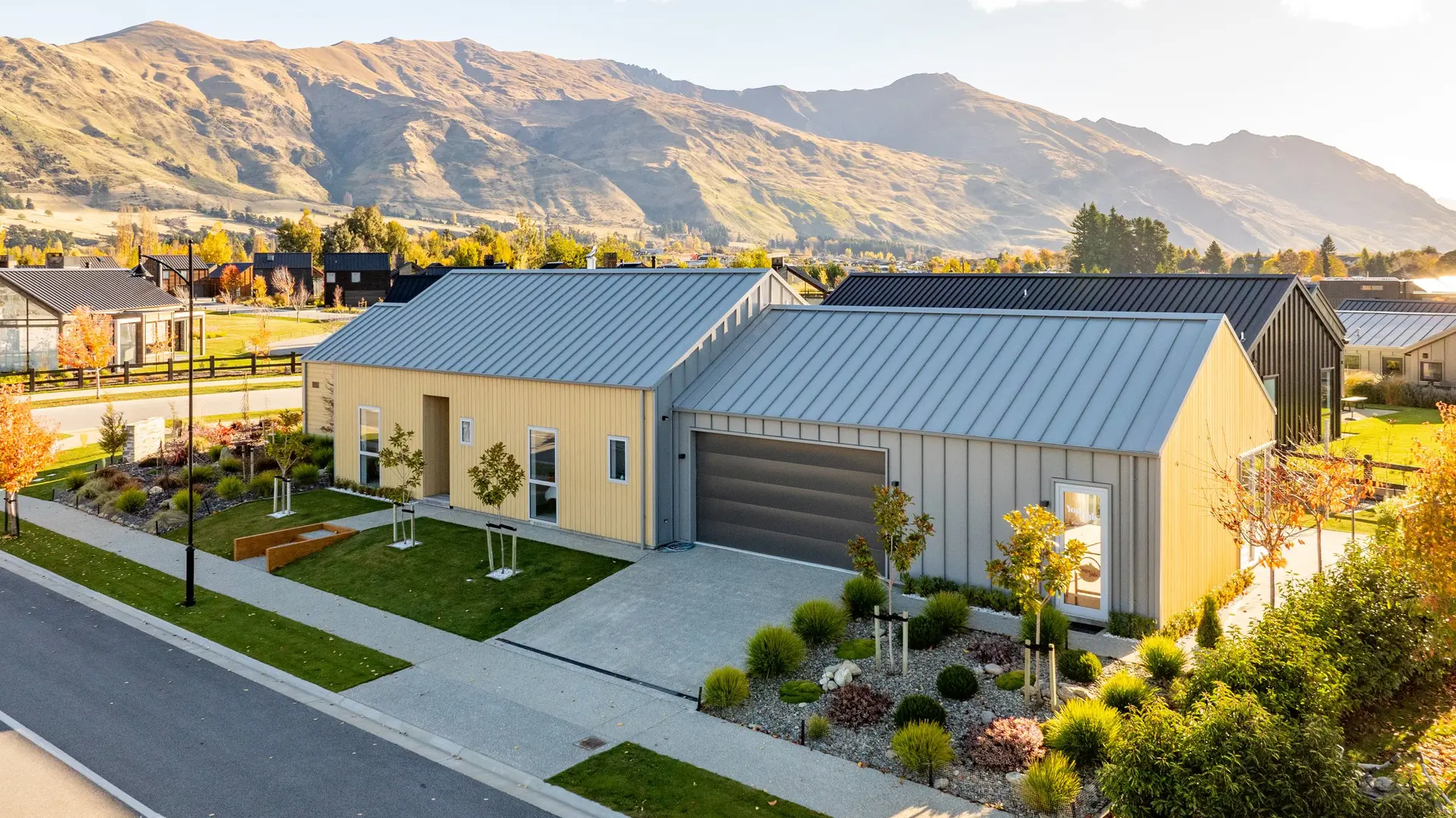
Most of what makes a house comfortable is invisible.
Building today comes with more options and more opinions than ever. It can be hard to know what actually matters. This page explains the principles we focus on, and why.
You are paying to heat the air that leaves.
Airtightness is fundamental to how a home performs, both in comfort and durability. It helps retain the air you have already paid to heat or cool, reducing uncontrolled energy loss.
It also helps manage moisture. Everyday living creates moisture through cooking, showering and even breathing. Without control, that moisture can move into wall and ceiling cavities, where it can affect insulation performance and long-term durability.
Combined with the right ventilation strategy, a well-sealed home gives you greater control over both energy and moisture.
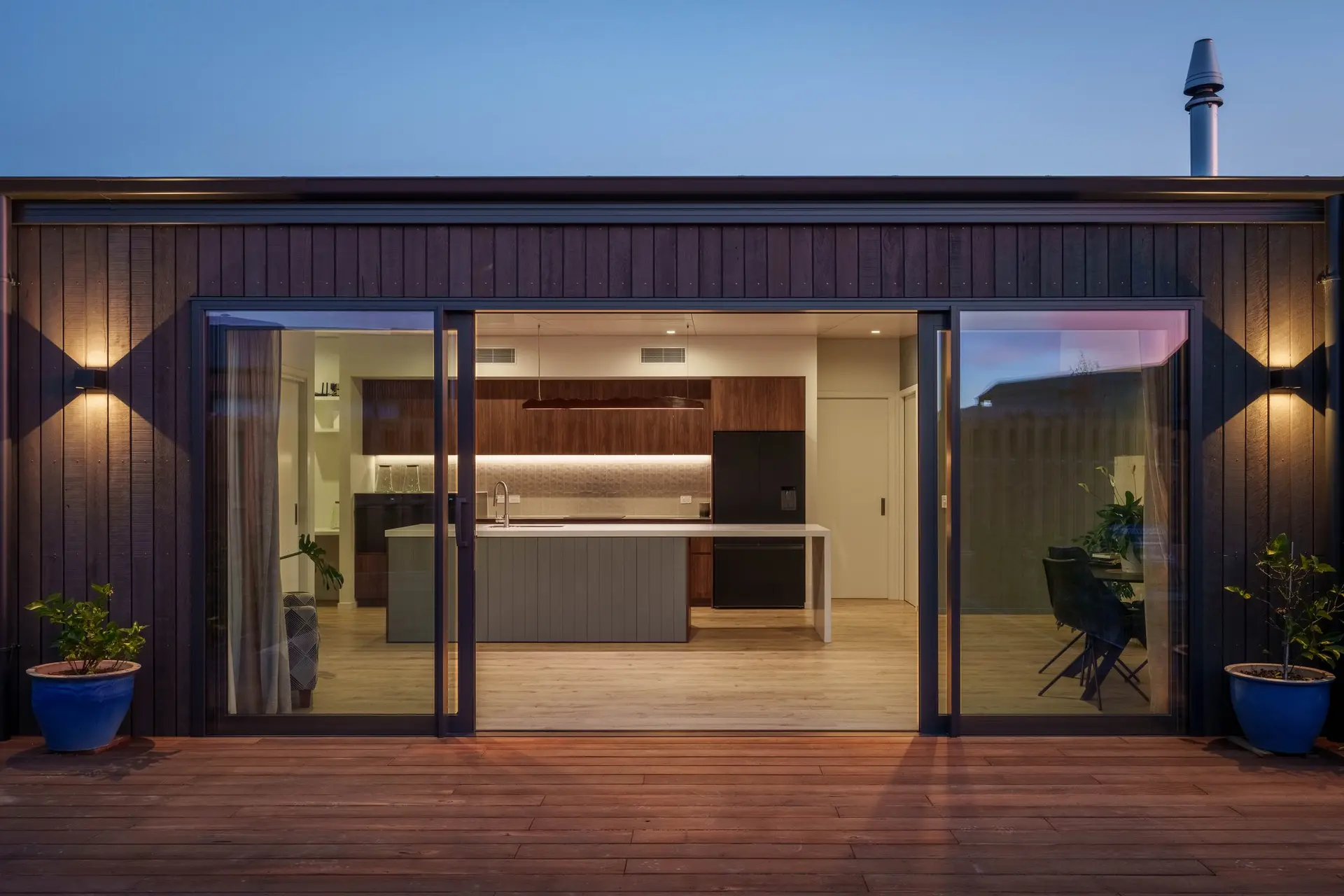
A well-sealed home, paired with the right ventilation strategy, gives you control over both energy and moisture.
Kyeburn Residence · Kyeburn, Wānaka
What one number tells you.
Airtightness is measured using a blower door test, which pressurises the home to 50 Pascals and measures how much air leaks through the building envelope. The result is expressed as Air Changes per Hour at 50 Pa, or ACH50. Lower numbers mean less uncontrolled leakage.
A typical New Zealand new build is around 5 ACH50, while our target range is 1.0–1.5 ACH50. We aim for a meaningful improvement in airtightness while keeping performance, cost and buildability in balance.
1.0–1.5 ACH50 · Our target range
A typical New Zealand house swaps all of its air every twelve minutes.
-
12 min Typical NZ new build 5.0 ACH50 · BRANZ research findings
-
40–60 min Airtight Homes 1.0–1.5 ACH50 · Our build target
-
100 min Certified Passive House 0.6 ACH50 · International standard
ACH figures shown are blower-door test results measured at 50 Pascals (ACH50).
Most of the improvement happens before certification.
Our 1.0–1.5 ACH50 target delivers a substantial reduction in uncontrolled air leakage compared with a typical new build. Certified Passive House goes further again, but the additional improvement is smaller. We aim for the point where performance, comfort, cost and buildability are still working in balance.
A sealed house is not a closed one.
As homes become more airtight, controlled ventilation becomes increasingly important. Everyday living produces carbon dioxide and moisture, while fresh air no longer enters through uncontrolled gaps as readily as it once did.
A balanced ventilation system brings in fresh, filtered air and removes stale air and excess moisture. Most systems also filter pollen, dust and airborne particles on the way in, helping maintain good indoor air quality year-round.
And yes, you can still open your windows. We encourage it when conditions are right. The difference is that fresh air no longer depends on them.
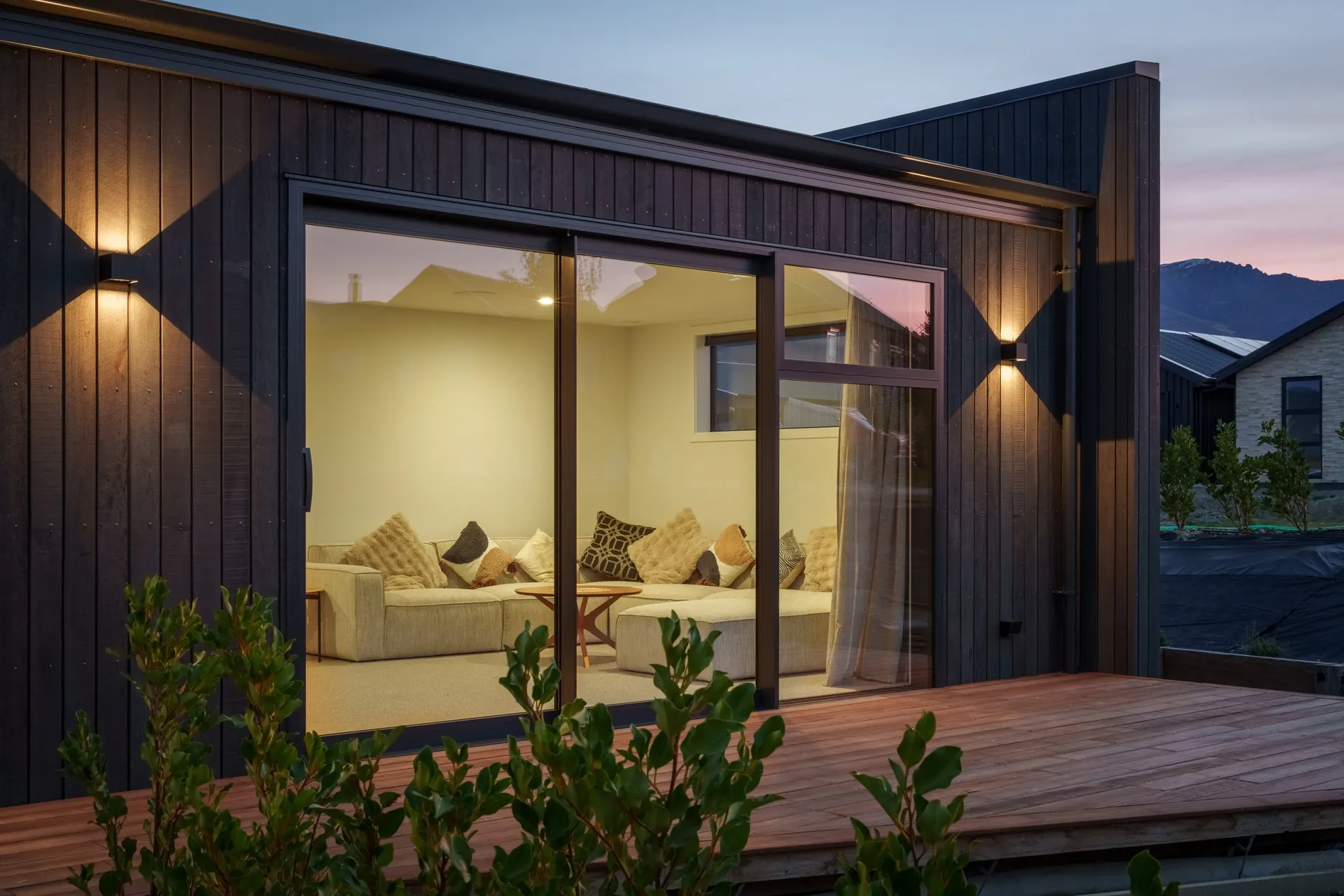
You can still open your windows. The difference is that fresh air no longer depends on them.
Kyeburn Residence · Kyeburn, Wānaka
Better performance, by design.
Better performance starts with better decisions early in design. We consider the building envelope, orientation, glazing, ventilation and thermal performance as one connected system, tailored to the site, budget and priorities of each project.
- 01
Building envelope
Insulation, airtightness, glazing and thermal bridging are considered together to create a more stable, comfortable home.
- 02
Site + orientation
We consider how the home sits on the site, including orientation, outlook, glazing and the practical realities of the section.
- 03
Ventilation + moisture
Ventilation and moisture management are designed as part of the building system, supporting a healthier and more controlled indoor environment.
- 04
Thermal modelling
Thermal modelling and performance analysis help test key decisions and understand how the home is likely to perform before construction begins.
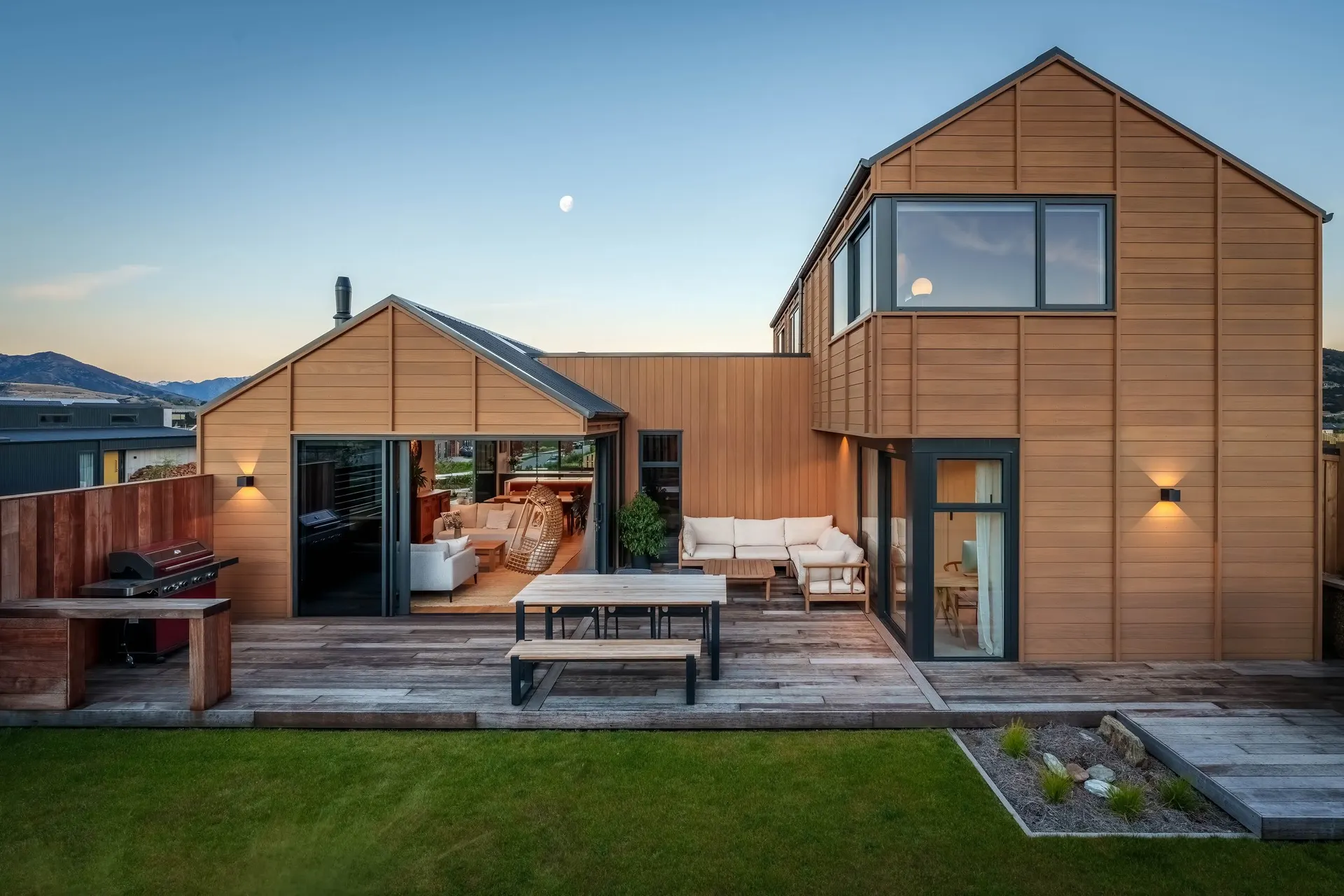
A high-performing home is the sum of its details, working together as one system.
Lammermoor Residence · Lammermoor, Wānaka
Not only for architectural builds.
Many of our projects are design-led, but the principles of airtightness, insulation and ventilation apply across a wide range of homes. For some clients that means a fully integrated high-performance build. For others it is targeted improvements that deliver real benefit without unnecessary cost.
Good building is not about spending more. It is about spending well.
The things people actually ask.
-
It helps retain the air you have already paid to heat or cool, reducing uncontrolled energy loss.
It also helps manage moisture. Everyday living creates moisture through cooking, showering and even breathing. Without control, that moisture can move into wall and ceiling cavities, where it can affect insulation performance and long-term durability.
Combined with the right ventilation strategy, a well-sealed home gives you greater control over both energy and moisture
-
As homes become more airtight, controlled ventilation becomes increasingly important. Everyday living produces carbon dioxide and moisture, while fresh air no longer enters through uncontrolled gaps as readily as it once did.
A balanced ventilation system brings in fresh, filtered air and removes stale air and excess moisture. Most systems also filter pollen, dust and airborne particles on the way in, helping maintain good indoor air quality year-round.
You can still open your windows. The difference is that fresh air no longer depends on them.
-
Airtightness is measured with a blower door test and expressed as Air Changes per Hour at 50 Pascals, or ACH50. Put simply, the lower the number, the less uncontrolled air leakage through the building envelope.
A typical New Zealand new build is around 5 ACH50. Certified Passive House uses 0.6 ACH50 as its airtightness threshold, while our target range is 1.0–1.5 ACH50.
Our target delivers a substantial improvement in airtightness while keeping performance, comfort, cost and buildability in balance.
-
Not at all. Many of our projects are design-led, but the principles of airtightness, insulation and ventilation apply across a wide range of homes.
We tailor the systems and level of performance to your budget, priorities and project. For some clients that means a fully integrated high-performance build. For others, it means targeted improvements that deliver real benefit without unnecessary cost.
Good building is not about spending more. It is about spending well.
-
Better performance starts with better decisions early in design. We consider the building envelope, site and orientation, ventilation, moisture management and thermal performance as one connected system.
Every project is tailored to the site, design, budget and priorities, with thermal modelling and performance analysis used where appropriate to test key decisions before construction begins.
-
Because we are deliberate about what we build, transparent about what it delivers, and focused on meaningful performance rather than complexity for its own sake.
We build beyond minimum compliance, measure performance where it matters, explain it in plain terms and guide without pressure.
-
There is no one-size-fits-all answer, and that is a good thing. We have spent considerable time researching and refining a range of systems and construction approaches that can adapt to different budgets and priorities.
Most of our projects sit within typical new-build cost ranges for the region, with performance tailored to suit. Whether you are making targeted improvements or pursuing a higher-performance build, we can help you find the best balance for your investment.
-
Yes, and we are excited about it. Our Wānaka show home is designed to demonstrate how airtightness, thermal performance and precision construction come together in a real home. Once complete, it will be open for viewing so you can experience the difference for yourself.
In the meantime, we share progress on Instagram.
-
With a conversation. We offer a design and build consultation where we can walk through your ideas, answer your questions and give you a clearer understanding of what could be possible based on your site, budget and goals. From there, you’ll have a clearer sense of the options and next steps.